
What Sets Commercial Painting Apart in Green Cove Springs
10/26/2025 05:00 PM
Commercial painting jobs have a different energy than residential work. They involve bigger spaces, more people, and higher expectations. If you’re a property owner, business manager, or facilities director in Green Cove Springs, you’ve likely noticed how commercial painting isn’t just about color. It’s about coordination, safety, and function.
Unlike a small house project, commercial painting in Green Cove Springs often happens while employees, clients, or the public are using the space. That adds layers of planning to ensure everything runs smoothly. In this blog, we’ll walk through what truly sets commercial painting apart, especially in a place like Green Cove Springs that blends small business charm with city and county buildings.
Higher Standards for Durability and Wear
Commercial buildings face a lot of wear. Whether it’s an office hallway or a warehouse floor, these areas see more people, more movement, and more mess.
That means ordinary paints won’t hold up for long. Instead, commercial painting uses different paint products made to take a beating. These paints can handle frequent cleaning, exposure to sunlight, and even chemical spills in certain settings.
Think about public lobbies, bathrooms, or food prep areas. The paint in these high-traffic zones must last and keep looking good. It needs to resist scuffs, mold, and dampness. In some cases, it’s even required to meet sanitation standards.
Professional painters understand how to choose coatings that are right for each space. They know which primers to use and how surface prep affects long-term performance. This kind of work isn’t one-size-fits-all. It’s tailored to fit the specific room, use, and activity happening there daily.
Scheduling Around Business Hours
Time matters in commercial painting. Most businesses can’t shut down for a week just to repaint. So painters work after hours, over weekends, or in carefully planned stages to avoid disturbing the workday.
Coordinating a repaint inside a busy building is like solving a puzzle. Crews might need to paint one office section at night and move to another the next day. It takes strong communication with building managers to keep things moving.
Even something as simple as blocking off stairwells or elevators has to be timed right. One small disruption can throw off a shift or customer experience. That’s why commercial jobs rely on flexible schedules, and why planning every detail is so important.
Safety and Compliance Requirements
Commercial painters face more safety rules than you might expect. Whether it’s working on a school gym ceiling or the exterior of a city building downtown, there are limits on how, when, and where painters can work.
Some projects require lift equipment to reach higher sections. Others need lane closures, caution signs, or protective barriers for passersby. Painters might be working near electrical panels or HVAC systems and must follow tight protocols.
In Green Cove Springs, certain public buildings must meet extra codes for health and safety during renovations or maintenance. We map out those requirements during the planning phase so crews can work with confidence from start to finish.
Sometimes this even means adding extra team members for safety spotters or splitting the job into phases to avoid high-traffic times. It’s less about painting fast and more about painting smart, without putting people at risk.
Specialized Surfaces and Equipment
Not every surface in a commercial building is the same. Some walls are concrete. Others are made from metal, wood, or laminate. A daycare may need colorful, easy-clean paint. A city warehouse may need industrial floor coatings.
Each surface comes with its own prep steps and paint choices. That’s why professionals bring more than just brushes and rollers.
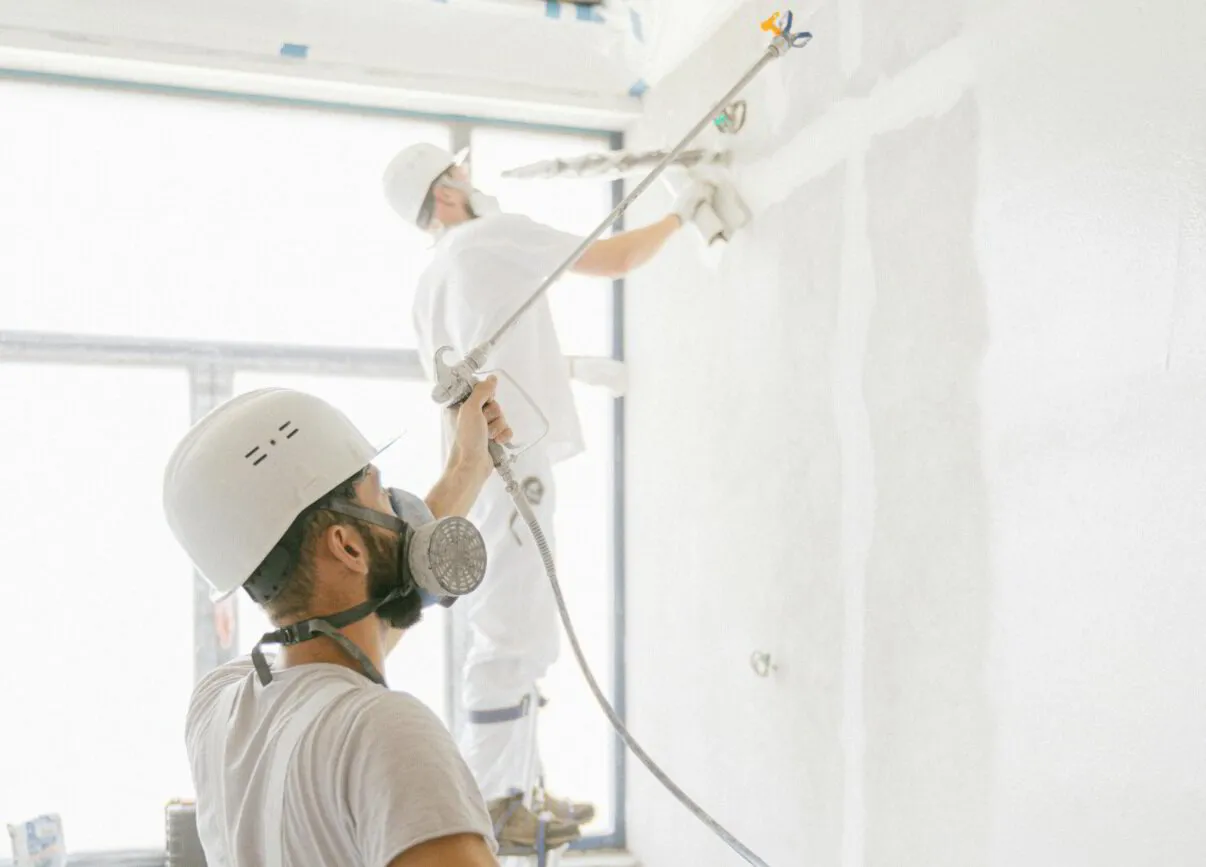
Airless sprayers work well on large open walls and ceilings. Specialty coatings require mixing systems or temperature control. And high-build primers, often used in commercial settings, might need more drying time and special attention.
Painters also have to be careful around systems like fire sprinklers or motion sensors. One wrong move can trigger costly responses. Knowing how to move smoothly through unfamiliar spaces without damaging anything is part of the job.
Working in Occupied or Multi-Use Buildings
Some of the trickiest commercial painting happens in buildings that stay open while the work is happening. That might be a school, medical office, or small retail center. In these spaces, painters work while people are nearby.
That calls for extra focus on containment. Plastic sheeting controls dust. Taped-off areas keep the public safe. Low-odor paints reduce impact where people work or learn.
Every detail has to be double-checked, from taping signs to managing cleanup between shifts. Crews move carefully to avoid damaging equipment, furniture, or fixtures. In sensitive workspaces, like clinics, painters may even use extra filtering or quieter tools.
This kind of coordination only works when everyone is on the same page. Every hour of painting is scheduled to fit around the building’s use, without slowing down the day-to-day.
Why These Differences Matter for Local Projects
Green Cove Springs is a mix of small businesses, government buildings, schools, and medical centers. Each one brings different needs to a painting project.
We’ve seen how even the same type of room, like a front lobby, can require a completely different strategy based on the building’s use, age, or layout. One entryway might be next to a breakroom and need slip-resistant floor paint. Another may sit near the server room and call for dust control.
In cooler fall months, many places schedule painting before the holidays or end-of-year deadlines. That means crews need to move quickly but safely, without cutting corners.
Planning in advance allows for better scheduling, the right prep, and a cleaner finish with fewer delays. Whether it’s touching up city offices off Walnut Street or refreshing an office park near Highway 17, understanding these differences can make or break a smooth project. It’s never just about color, it’s about fitting the work into a space that’s already working.
Why the Right Approach Makes All the Difference
Commercial painting in Green Cove Springs isn’t small-scale work. Buildings stay open while painters roll, tape, and move around ongoing business. One job might need industrial-grade paint. Another might need crews to work overnight or around machines.
Every little detail, when the work happens, what tools are used, what safety steps are taken, makes a big difference in the results.
This kind of work depends on planning. And it works best when every part of the process, from prep to cleanup, is built to match how the space is used day to day. A smart approach helps keep buildings clean, safe, and open for business.
At 1st Coast Painting & More Inc., we bring planning, the right tools, and experience to keep projects moving without slowing down your day. When your schedule depends on timing and clean results, our approach to commercial painting in Green Cove Springs keeps things simple, smooth, and built to last.
We are a veteran and family owned and operated, full service interior and exterior residential and commercial painting company.
For over 15 years our experienced staff, unmatched service, and industry-best pricing has been the difference maker in how we approach our business.
From commercial properties for your business, to repainting the most important room in your home, we are proud to serve our communities in Clay County and are committed to providing the highest quality results.




Leave a Reply